
Continuous Casting & Rolling Line
Turn molten aluminium or copper into ingots, billets and rod with a continuous casting line matched to your melting capacity.
- Product forms
- Ingot, billet, rod
- Metals
- Aluminium, copper
- Configurations
- Ingot casting, horizontal rod casting, casting + rolling
- Ancillary equipment
- Water cooling towers, billet heating, induction drying
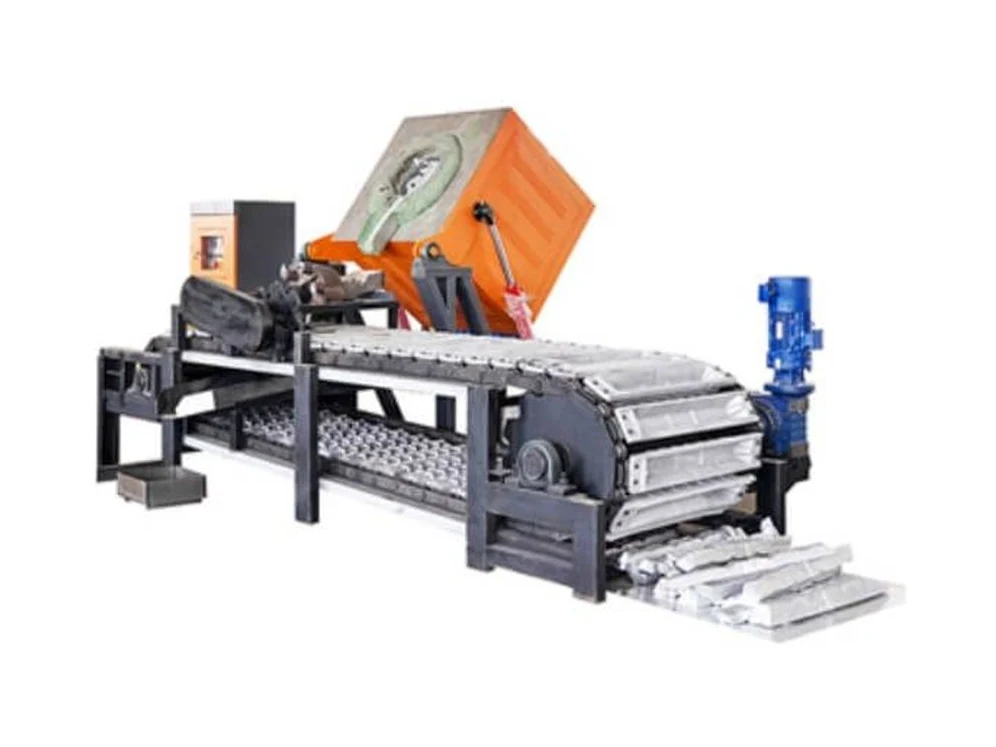
How it works
Casting is where recovered metal becomes a saleable product. A continuous casting line takes molten metal from the furnace and delivers a constant cross-section — ingot, billet or rod — with consistent dimensions and structure, so downstream rolling or re-melting behaves predictably.
The line is specified as a system: melting and holding capacity, casting speed, mould or wheel configuration, cooling, and take-off. Because the casting rate has to match the furnace, we size the whole chain together rather than selling a caster against an existing furnace and hoping the two agree.
Configurations include aluminium and copper ingot casting, aluminium rod horizontal continuous casting, and combined casting-and-rolling lines where rod goes straight from caster to mill. Water cooling towers, billet heating and induction drying furnaces are supplied as part of the same package.
Continuous casting turns molten metal into a solid semi-finished shape in one uninterrupted step. Metal is poured into a cooled mould, a skin forms, and the strand is withdrawn at a rate matched to the casting temperature, so the solidification front stays in the same place in the mould. The result is a billet, ingot or rod with consistent structure instead of a series of individual ingots.
Rolling follows casting when the product needs a smaller section. The cast strand is reduced through successive stands while it is still hot enough to deform, which is why the caster and the mill are specified together: the casting rate has to feed the mill, and the reduction schedule has to match the section the caster can produce.
Key features
- Ingot, billet and rod configurations
- Casting rate matched to melting and holding capacity
- Aluminium and copper variants
- Combined casting-and-rolling arrangement available
- Cooling, heating and drying equipment from the same supply
How to choose casting and rolling
- Define the finished product first — ingot weight, billet section or rod diameter — and derive the casting rate from it.
- Match casting speed to melting capacity. A caster that outruns the furnace idles; one that is slower than the furnace builds a queue of molten metal.
- Confirm the cooling water demand; secondary cooling is the constraint on casting speed in most installations.
- Decide how much of the line you are buying: casting only, casting plus rolling, or casting with the auxiliary heating, drying and cooling equipment specified alongside it.
Technical data
| Product forms | Ingot, billet, rod |
|---|---|
| Metals | Aluminium, copper |
| Configurations | Ingot casting, horizontal rod casting, casting + rolling |
| Ancillary equipment | Water cooling towers, billet heating, induction drying |
| Line data | Specified against melting capacity; quoted per project |
Typical applications
- Secondary aluminium ingot production
- Copper and aluminium rod production
- Foundry charge preparation
- Recycled metal upgrading before rolling
Specifications are indicative for the model family and are confirmed against your material in the quotation. Wear parts, power supply and control options are listed per project.
Frequently asked questions
Where is the Continuous Casting & Rolling Line normally installed?
Typical installations: Secondary aluminium ingot production; Copper and aluminium rod production; Foundry charge preparation. Siting is decided by the feed arrangement and the space needed around the machine for maintenance access.
How do I get a price for the Continuous Casting & Rolling Line?
There is no list price — every unit is configured to the material first, because the drive, chamber or coil changes with it. Send the material you process, the throughput you need per hour and the destination port, and the quotation is built on those three.
What is continuous casting and why use it instead of ingot casting?
In continuous casting, molten metal is poured through a cooled mould and withdrawn as a continuous strand, so solidification happens once and in a controlled place. Compared with casting individual ingots, it gives a more uniform structure, less crop loss and a shape that feeds a rolling mill directly.
How is casting speed determined?
By the balance between pouring temperature, mould cooling and secondary cooling: the strand must be solid enough at the withdrawal point to hold its shape. Practical casting speed is therefore set with the melting supply and the cooling system in view, not chosen independently.
Can a casting line be added to an existing melting operation?
Usually yes, and that is the common case — the caster is sized to the furnace that already exists. The information needed to specify it is the alloy, the pour weight per heat, the required section, and the space and water available for cooling.
Often specified together
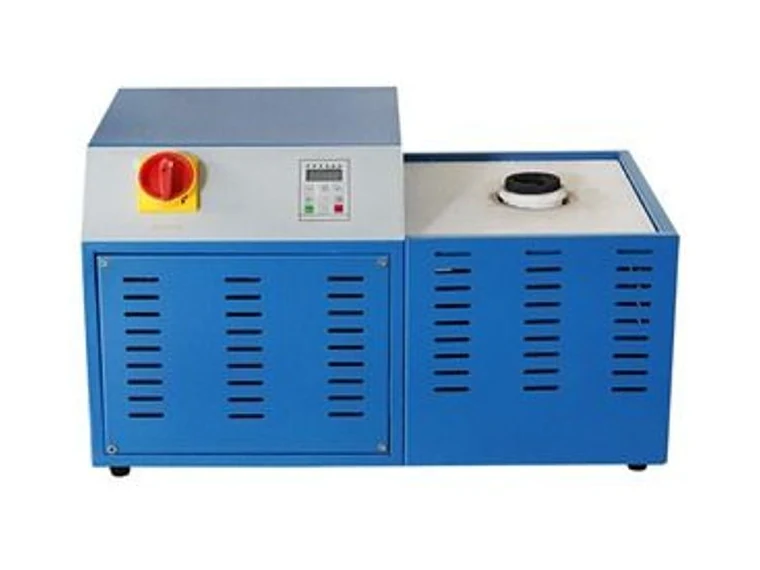
Medium Frequency Induction Melting Furnace
Medium frequency induction melting furnaces in two size classes: 1–10 kg crucible units for gold and silver, and a 50 kW furnace melting 70–100 kg of aluminium per heat.
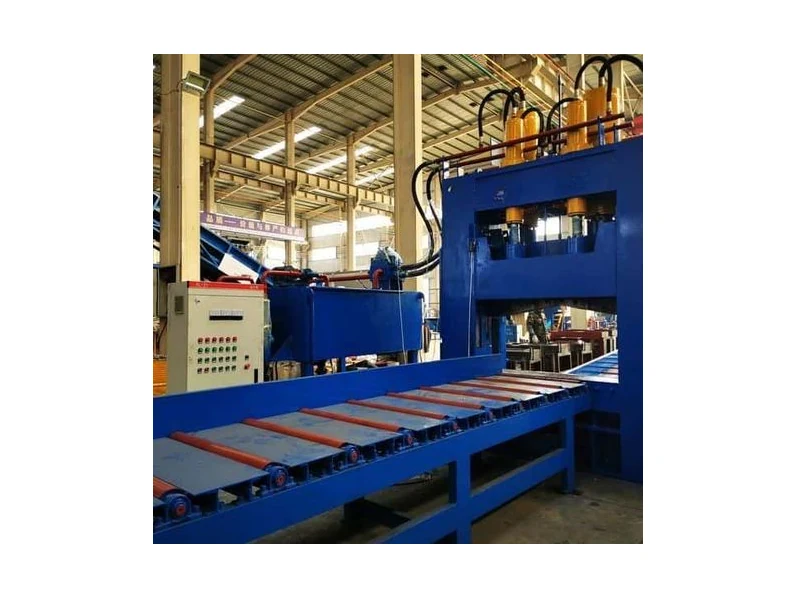
Hydraulic Gantry Shear
800-ton shearing force and a 1,600 mm blade for thick plate, H-beams and rail — clean shear faces with a 12–18 second cycle.