
Medium Frequency Induction Melting Furnace
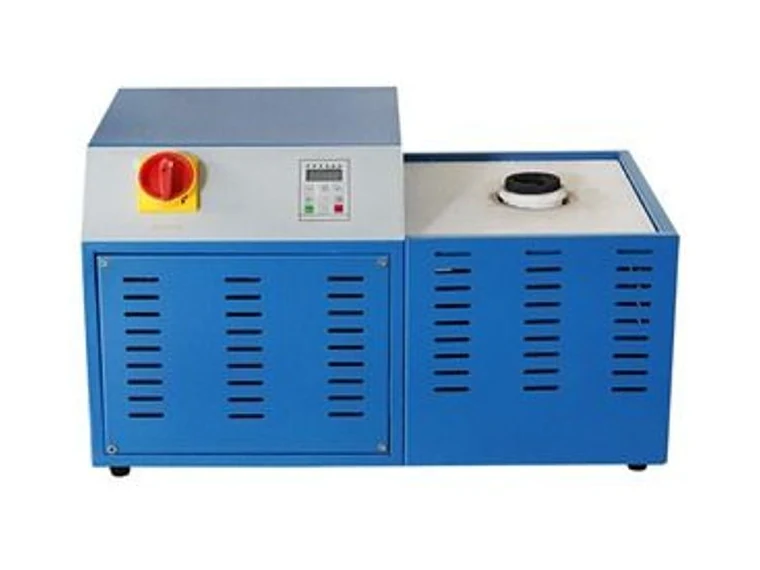
Medium frequency induction melting furnaces in two size classes: 1–10 kg crucible units for gold and silver, and a 50 kW furnace melting 70–100 kg of aluminium per heat.
- Type
- Medium frequency induction melting furnace
- Heating method
- IGBT induction
- Max. temperature
- 1,600 °C
- Crucible
- Graphite
Crucible units from US$499; the 50 kW industrial furnace from US$5,499. Price depends on capacity, voltage and crucible size.
How it works
Medium frequency induction heating melts metal inside a graphite crucible with no flame and no combustion by-products. A closed melting environment keeps oxidation loss low, which protects both the purity of the melt and the value of the batch.
The range splits by charge size, because the two ends are bought by different people. The small models take a 1 kg to 10 kg crucible and suit jewellery, refining and laboratory work: 220 V single phase up to 2 kg, 380 V three phase from 3 kg, with a 3 to 5 minute melt and IGBT heating to 1,600 °C.
The industrial model is built around a 50 kW power supply running at 1,500 Hz on 380 V three phase. It melts 70–100 kg of aluminium scrap per heat in 40–60 minutes, in a graphite crucible, with air cooling and a furnace body 1,250 mm in diameter on a 1,300 × 850 × 2,000 mm frame. Output goes to casting rather than to a holding furnace.
Above that class the furnace is specified against your melt weight, shift pattern and available transformer capacity rather than sold from a list — those configurations are quoted per project.
An induction furnace melts by putting the metal inside the magnetic field of a coil. Alternating current in the coil induces currents in the charge itself, so the metal heats from the inside out and the melt is stirred electromagnetically as it forms. There is no flame and no combustion gas in contact with the metal, which is why losses and gas pickup are lower than in a fuel-fired furnace.
Frequency sets the character of the melt. Medium frequency couples efficiently into a charge of mixed piece size and gives the stirring that homogenises alloy, while higher frequency concentrates power into smaller volumes. Power supply, coil, capacitor bank and cooling are designed as one system — changing furnace size without changing the power pack is what produces disappointing melt rates.
Key features
- Two size classes on one induction platform: 1–10 kg crucible and 70–100 kg per heat
- IGBT induction heating, up to 1,600 °C
- 3–5 minute melts on the precious metal models
- 40–60 minutes per heat on the 50 kW aluminium furnace
- Graphite crucible, air cooling, single control cabinet
How to choose induction melting
- Start from the pour weight and the melt time you need, then work back to installed power; furnace capacity alone tells you the crucible volume, not the melting rate.
- Check the transformer and the supply you have. A furnace that needs more kVA than the site can deliver is a site upgrade, not an equipment purchase.
- Decide on tilt arrangement (hydraulic or manual), because it determines the pouring layout and the ladle handling around the furnace.
- Plan cooling as part of the package. Closed-loop cooling is what allows the power supply to run continuously without depending on the local water quality.
Technical data
| Type | Medium frequency induction melting furnace |
|---|---|
| Heating method | IGBT induction |
| Max. temperature | 1,600 °C |
| Crucible | Graphite |
| Small models | 1–10 kg charge, 220 V / 380 V, 3–5 min melt |
| Industrial model | 70–100 kg per heat, 50 kW, 1,500 Hz, 40–60 min |
| Cooling | Air cooled (industrial unit); water-cooled leads and pump on small units |
| Warranty | 12 months, lifetime technical support |
| Model | Voltage | Power | Melting time | Furnace size (mm) | Gross weight |
|---|---|---|---|---|---|
| 1 kg | 220 V | 3 kW | 3 min | 650 × 350 × 350 | 20 kg |
| 2 kg | 220 V | 5 kW | 3 min | 650 × 350 × 350 | 26 kg |
| 3 kg | 380 V | 7 kW | 3 min | 870 × 355 × 400 | 32 kg |
| 5 kg | 380 V | 10 kW | 4 min | 870 × 355 × 400 | 38 kg |
| 8 kg | 380 V | 15 kW | 4 min | 850 × 807 × 345 | 48 kg |
| 10 kg | 380 V | 20 kW | 5 min | 850 × 807 × 345 | 58 kg |
Steel, stainless steel, copper and aluminium melting variants are quoted separately.
| Capacity per heat | Power | Frequency | Melting time | Furnace body | Overall size | Weight |
|---|---|---|---|---|---|---|
| 70–100 kg | 50 kW | 1,500 Hz | 40–60 min | Ø 1,250 mm | 1,300 × 850 × 2,000 mm | 800 kg |
380 V three-phase, air cooled, graphite crucible. Larger capacities are quoted against your melt weight, shift pattern and transformer capacity.
Typical applications
- Aluminium scrap remelting ahead of casting
- Copper alloy and bronze casting
- Jewellery manufacturing and precious metal refining
- Gold recovery and re-melting
- Laboratory analysis and sample preparation
Specifications are indicative for the model family and are confirmed against your material in the quotation. Wear parts, power supply and control options are listed per project.
Frequently asked questions
Which models of the medium frequency induction melting furnace are available?
6 configurations are listed on this page: 1 kg, 2 kg, 3 kg, 5 kg, 8 kg, 10 kg. The right one is set by the throughput you need and the largest piece you will feed.
Where is the Medium Frequency Induction Melting Furnace normally installed?
Typical installations: Aluminium scrap remelting ahead of casting; Copper alloy and bronze casting; Jewellery manufacturing and precious metal refining. Siting is decided by the feed arrangement and the space needed around the machine for maintenance access.
How do I get a price for the Medium Frequency Induction Melting Furnace?
There is no list price — every unit is configured to the material first, because the drive, chamber or coil changes with it. Send the material you process, the throughput you need per hour and the destination port, and the quotation is built on those three.
How long does an induction furnace take to melt a charge?
Installed power sets the melt rate, not the crucible size. A given crucible can be paired with different power packs and will melt at different rates, so the figure to specify is the melt rate you need in tonnes per hour and the power supply follows from it. Charge weight then sets the batch time on top of that.
Why choose induction melting over a gas or oil furnace?
Induction heats the metal directly, so there is no combustion gas in the melt, no flame impingement and far less oxidation of the charge. It also stirs the melt electromagnetically, which helps alloy homogeneity. The trade-off is a higher electrical demand and a cooling requirement that a fuel-fired furnace does not have.
Often specified together
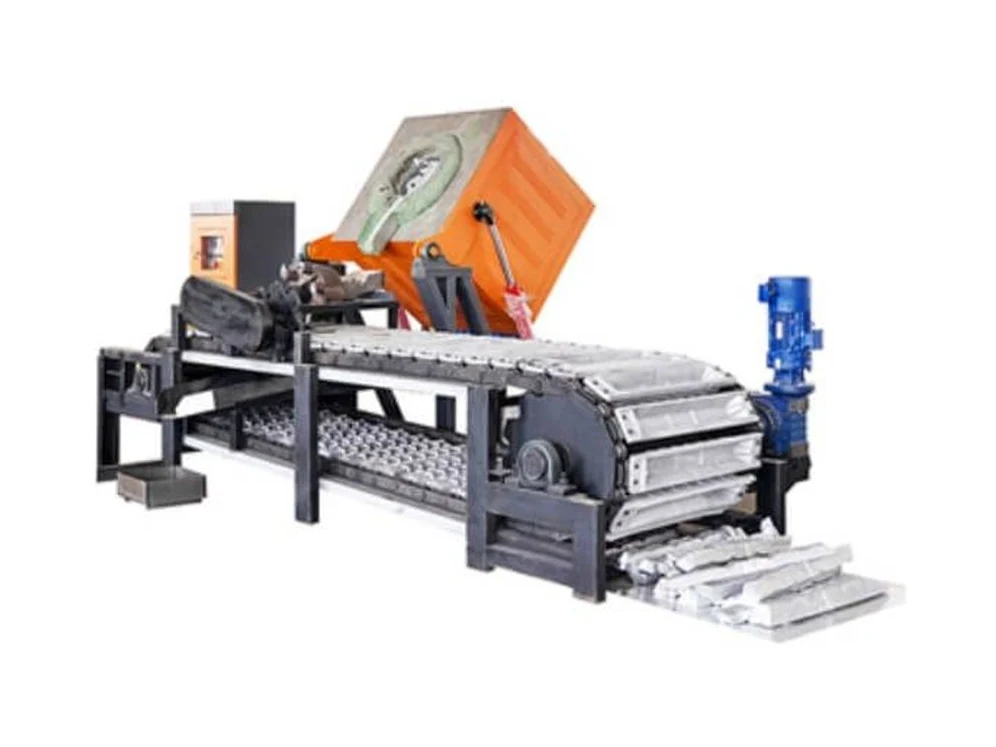
Continuous Casting & Rolling Line
Turn molten aluminium or copper into ingots, billets and rod with a continuous casting line matched to your melting capacity.
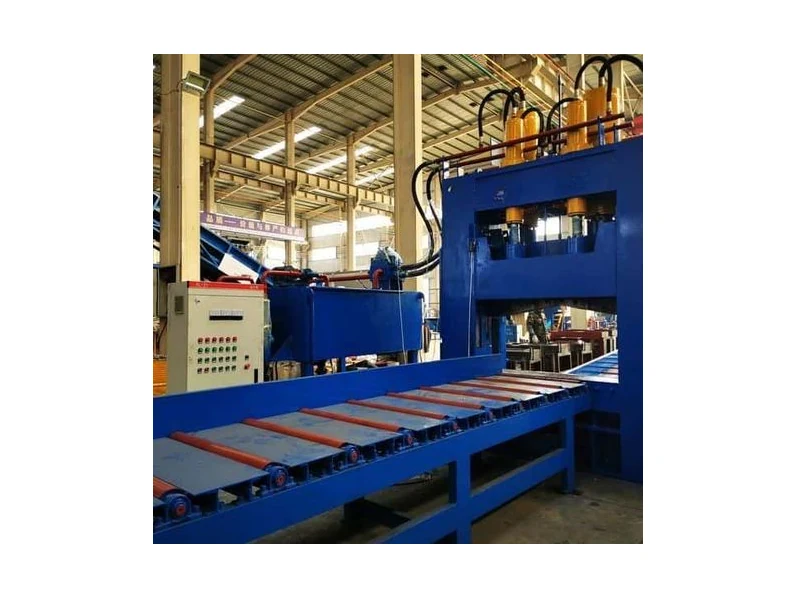
Hydraulic Gantry Shear
800-ton shearing force and a 1,600 mm blade for thick plate, H-beams and rail — clean shear faces with a 12–18 second cycle.