Complete lines

Recycling lines designed from the material forward

A line is a sequence of decisions, not a list of machines. What you feed in determines the first stage; what your buyer accepts determines the last. Everything between is sized to connect the two.

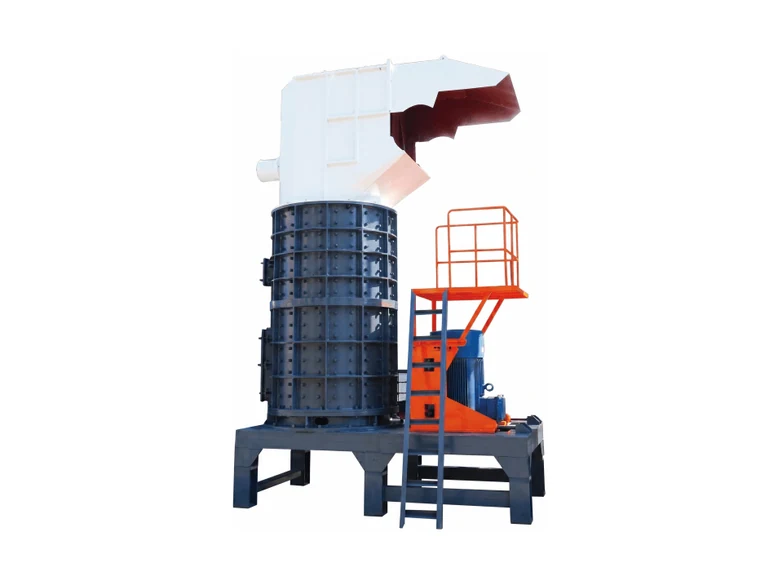
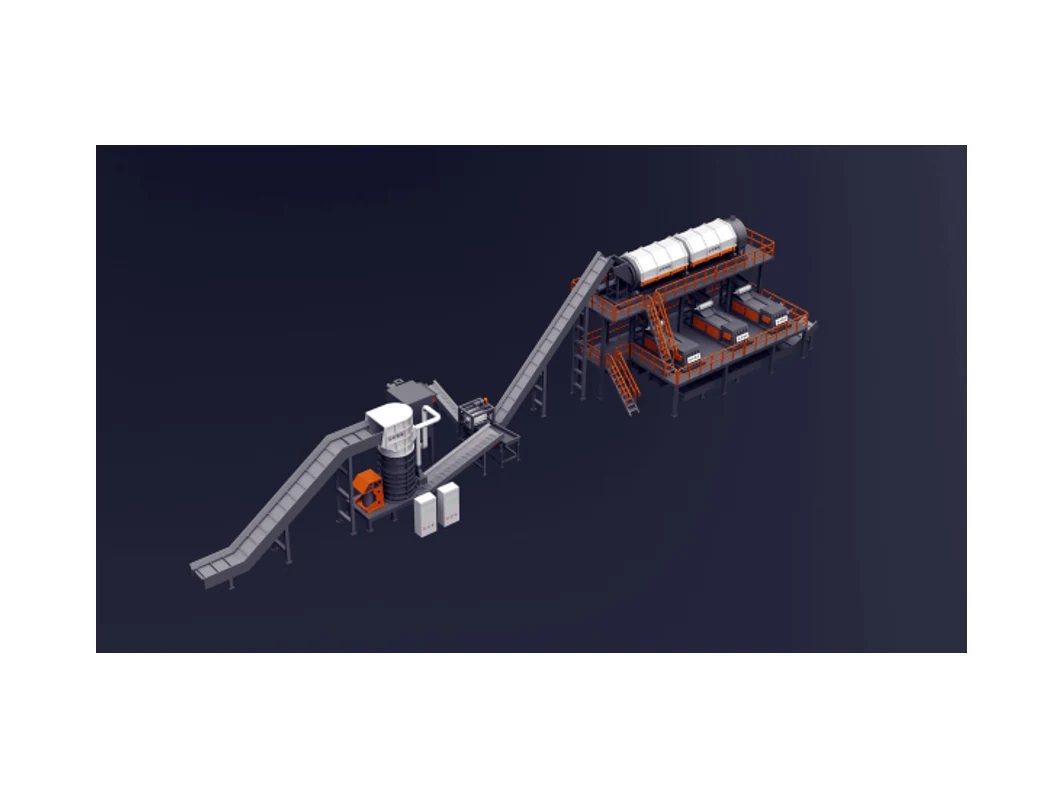
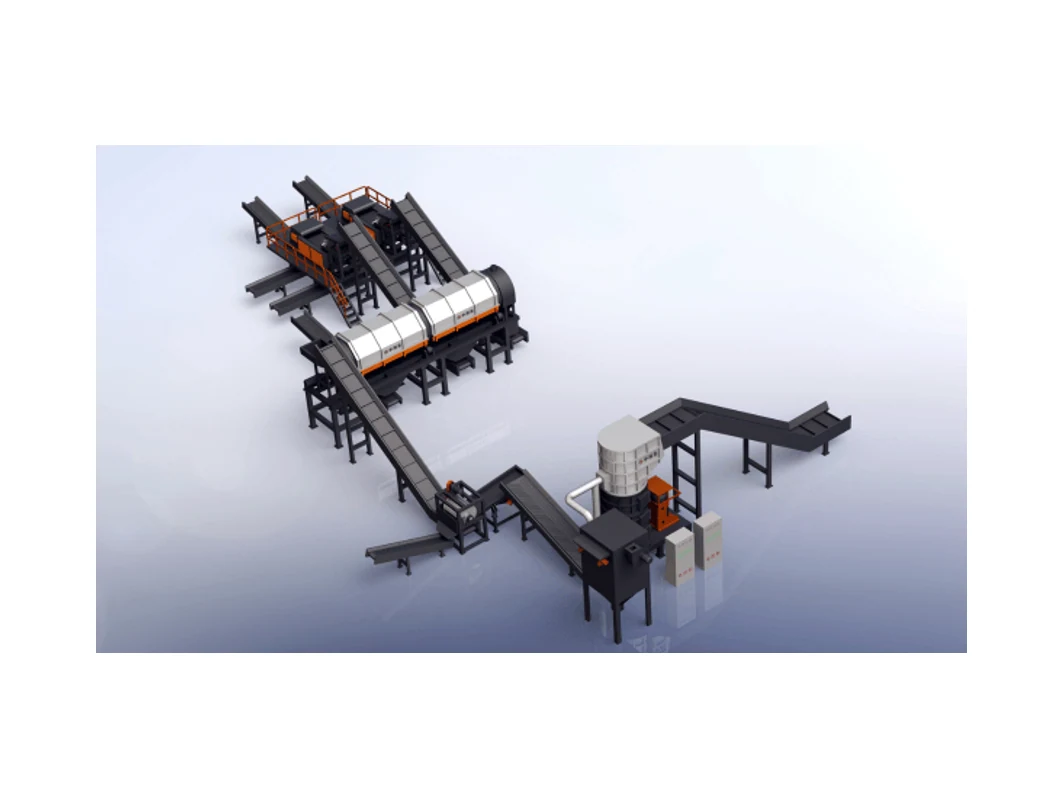
Scrap aluminium recycling line layout
01

Scrap Aluminium Recycling Line

Shred, crush and separate mixed aluminium scrap into a clean furnace-ready fraction, with ferrous and non-ferrous streams split out along the way.

Problem
Mixed aluminium scrap arrives with steel attachments, paint, plastic and dirt. Feeding it straight to the furnace wastes energy on contamination and produces inconsistent recovery.
Result
A relatively pure aluminium fraction ready for de-coating and melting, plus separated ferrous and residue streams that can be sold or processed separately.
See the process
Scrap steel crushing and sorting recycling line
02

Scrap Steel Crushing & Sorting Line

Reduce heavy steel scrap to a dense, uniform furnace charge while separating non-ferrous contamination out of the stream.

Problem
Heavy steel scrap is bulky, hard to transport economically and often carries copper, aluminium and plastic contamination that mills penalise at the weighbridge.
Result
A denser, cleaner ferrous product with non-ferrous and non-magnetic material split out — better mill acceptance and less material lost to the residue pile.
See the process
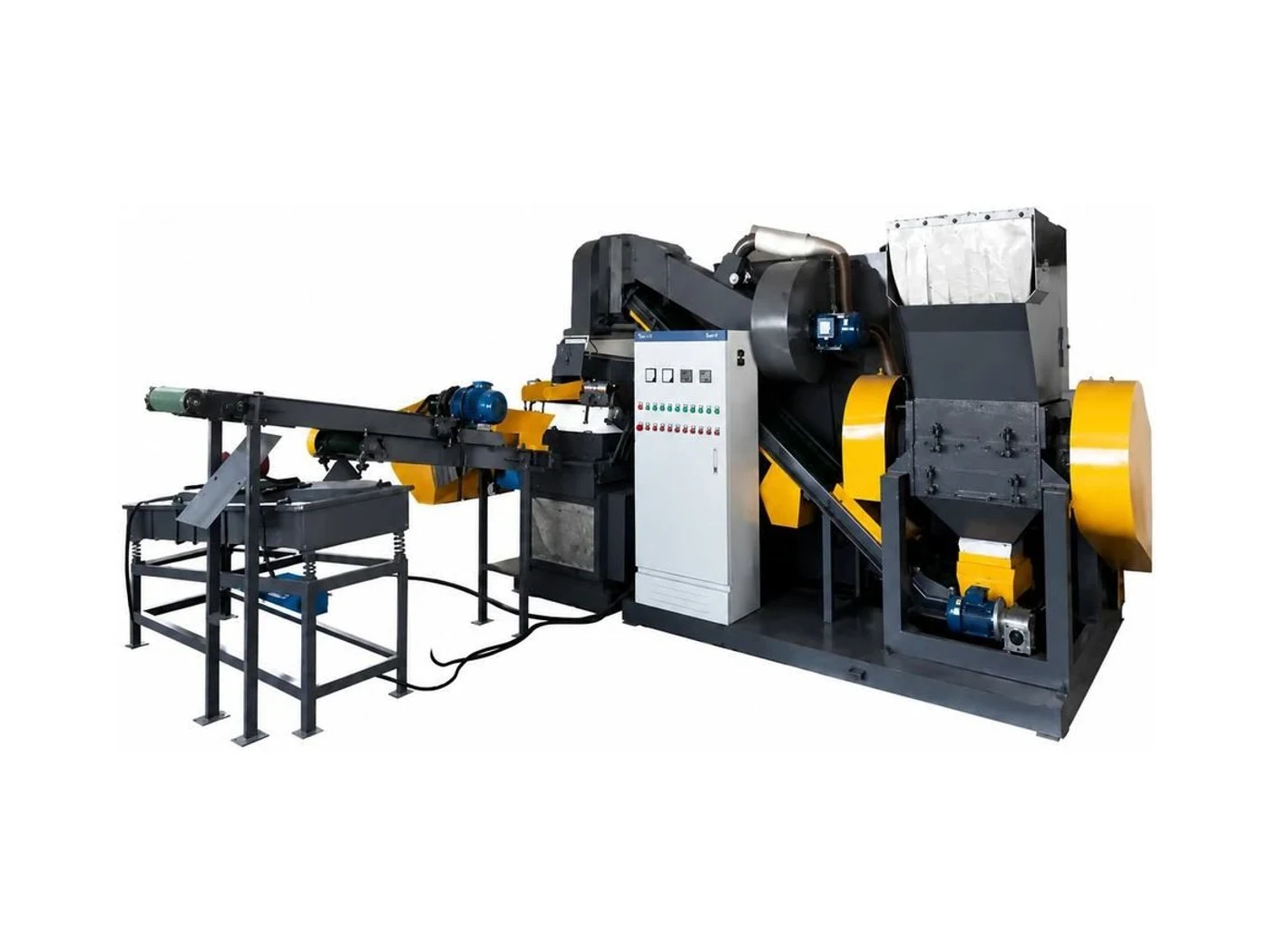
Cable granulator and separation line with conveyor and vibratory sorting table
03

Scrap Cable & Wire Recycling Line

Recover saleable copper granules from mixed and thin cable that manual stripping cannot handle economically — 300–500 kg/h on the heavy-duty build.

Problem
Thin, mixed and multi-strand cable is slow to strip by hand and often sold unprocessed at a fraction of its copper value. Burning is illegal in most markets and destroys the metal.
Result
Clean copper granules at 99.5–99.9% purity that can go straight to a refinery or trader, with the plastic fraction separated for recycling. Accepts automotive harness, LAN cable, industrial and household wire, and capillary tube.
See the process
Equipment for waste home appliance crushing and recycling
04

Waste Appliance Crushing & Recycling

Dismantle and crush end-of-life appliances, then split out ferrous, non-ferrous and plastic fractions for separate sale.

Problem
Refrigerators, washing machines and air conditioners are composite products. Landfilling or shredding them as mixed waste loses recoverable metal and creates disposal cost.
Result
Separated ferrous, non-ferrous and plastic streams, with refrigerant and compressor handling addressed before crushing.
See the process

Have a material mix that does not fit a template?

Send us the composition and your target output. We will propose a stage sequence and tell you where the money actually goes.

Request a quoteWhatsApp us

Or call +86-173-2941-6874 · Mon–Sat, 08:30–18:00 (GMT+8)