
Hydraulic Gantry Shear
800-ton shearing force and a 1,600 mm blade for thick plate, H-beams and rail — clean shear faces with a 12–18 second cycle.
- Shearing force
- 800 t (7,840 kN)
- Main drive
- 360 kW hydraulic pump
- Blade length
- 1,600 mm
- Max. material width
- 1,500 mm
How it works
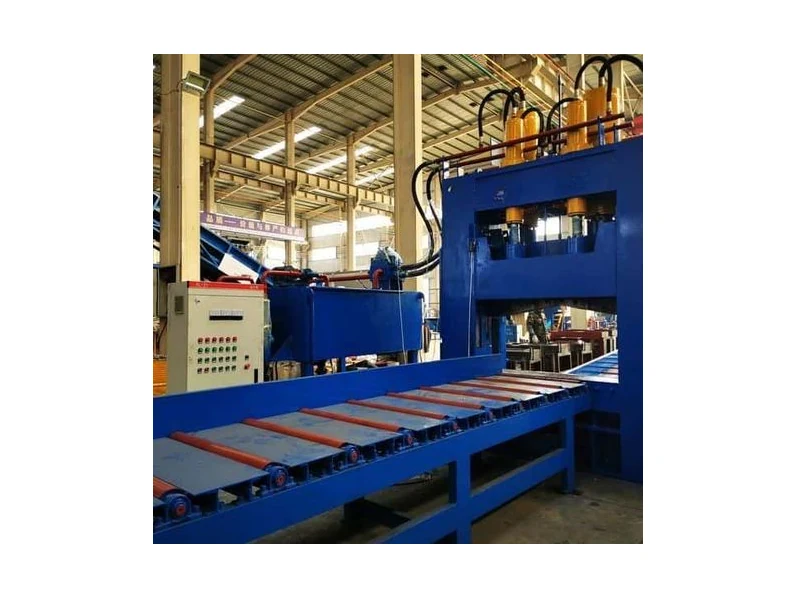
The Q91 series gantry shear is built for the material that smaller shears cannot touch: thick structural plate, H-beams, railway rail and heavy industrial scrap. A 31.5 MPa hydraulic system drives the upper blade down with 800 tons of force across a 1,600 mm blade length, so large cross-sections are cut in a single stroke without repositioning.
A pre-compression hydraulic clamp holds the material during the cut, which is what produces a clean shear face instead of a torn one. Proportional valve control lets the operator slow the blade for thick material and speed it up for thin, and the full cycle completes in 12–18 seconds.
Blades are Cr12MoV tool steel at 58–62 HRC with four usable cutting edges per set — rotate to a fresh edge when one wears. The welded frame is stress-relieved after welding and the blade mounting surfaces are machined for alignment. PLC control tracks stroke count, hydraulic temperature and blade wear, and dual-hand control with light curtains and four-sided emergency stop is standard.
A shear does not reduce material to small pieces; it cuts long or bulky scrap into furnace-sized lengths and, in doing so, raises its bulk density. A hydraulic ram compacts the charge against a stationary anvil, then a blade descends and cuts it. The product is dense, uniform and cheap to transport, which is the whole point of the machine.
Throughput on a shear is governed by cycle time, not by cutting force. The force determines what the machine can cut without stalling; the cycle time — how fast the ram compacts, the blade cuts and the hold-down releases — determines how many tonnes leave the yard in a shift.
Key features
- 800 t shearing force across a 1,600 mm blade
- Pre-compression clamp for clean, accurate shear faces
- Cr12MoV blades, 58–62 HRC, four cutting edges per set
- Proportional valve control for material-matched blade speed
- PLC with stroke counter, temperature and blade-wear monitoring
How to choose shears and balers
- Work back from the size your customer will accept. A mill or foundry specifies a maximum piece size and a density, and those two limits set the cutting length and the box dimensions you need.
- Match cutting force to the heaviest section you expect, not the average scrap. Thick-wall pipe and plate are what stall an undersized shear.
- Look at cycle time and at how the machine is fed — a shear that is faster than the crane feeding it is money spent for nothing.
- Confirm the foundation and power requirements early; these machines are heavy, and site preparation often decides the delivery date.
Technical data
| Shearing force | 800 t (7,840 kN) |
|---|---|
| Main drive | 360 kW hydraulic pump |
| Blade length | 1,600 mm |
| Max. material width | 1,500 mm |
| Max. cut | Steel plate to 200 mm; round bar to Ø150 mm; H-beam to 500 mm |
| Cycle time | 12–18 s per cut |
| Hydraulic pressure | 31.5 MPa |
| Machine weight | approx. 85,000 kg |
Typical applications
- Large scrap steel processing yards
- EAF steel mill charge preparation
- Railway decommissioning and rail cropping
- Heavy industrial demolition and ship-breaking support
Specifications are indicative for the model family and are confirmed against your material in the quotation. Wear parts, power supply and control options are listed per project.
Frequently asked questions
What power supply does the Hydraulic Gantry Shear need?
360 kW hydraulic pump. Confirm the supply available on site — voltage, phases and available capacity — before the machine is configured, because the drive is built to the destination supply.
Where is the Hydraulic Gantry Shear normally installed?
Typical installations: Large scrap steel processing yards; EAF steel mill charge preparation; Railway decommissioning and rail cropping. Siting is decided by the feed arrangement and the space needed around the machine for maintenance access.
How do I get a price for the Hydraulic Gantry Shear?
There is no list price — every unit is configured to the material first, because the drive, chamber or coil changes with it. Send the material you process, the throughput you need per hour and the destination port, and the quotation is built on those three.
What does a gantry shear do that a shredder does not?
It cuts and densifies instead of fragmenting. Long beams, plate and mixed structural scrap come out as dense, uniform cut pieces of a length your customer will accept — without the fines, dust and downstream separation that shredding produces.
How is shear capacity measured?
Two numbers matter and they measure different things: cutting force, which sets the heaviest section the machine will cut cleanly, and cycle time, which sets how many tonnes a shift can process. A high-force machine with a slow cycle can be out-produced by a lighter, faster one on light scrap.
Often specified together
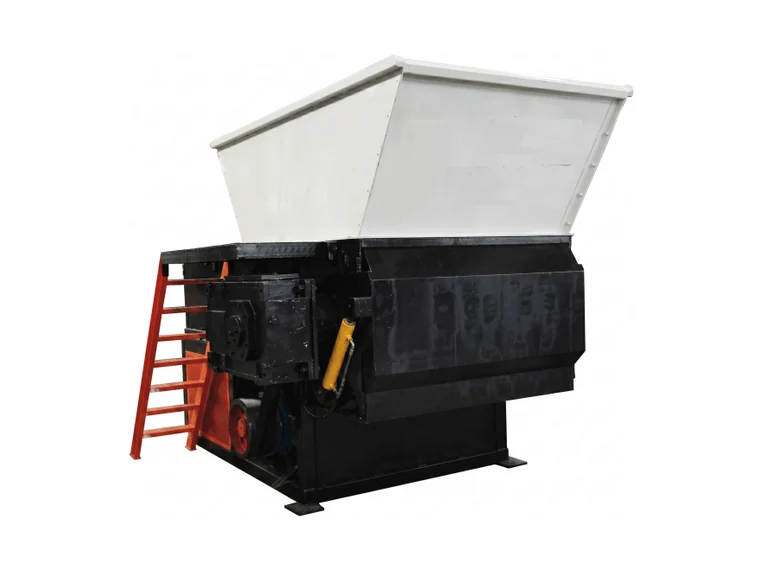
Industrial Metal Shredder
Single-, dual- and four-shaft shredders that reduce bulky metal scrap to a consistent 50–300 mm output, with anti-jam reversal and hardened blade sets.
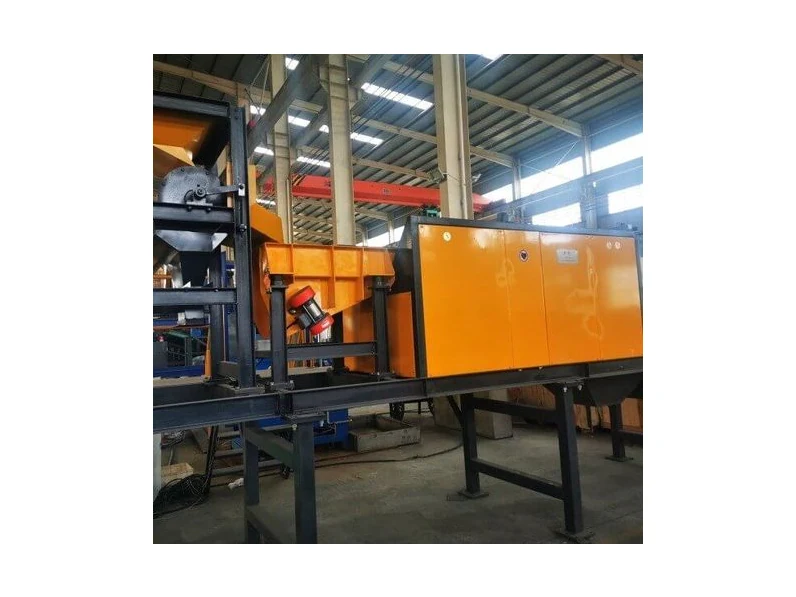
Eddy Current Separator
High-frequency rotor that ejects aluminium, copper and zinc from mixed streams, separating particles down to 3 mm at >99% aluminium recovery.