
Industrial Metal Shredder
Single-, dual- and four-shaft shredders that reduce bulky metal scrap to a consistent 50–300 mm output, with anti-jam reversal and hardened blade sets.
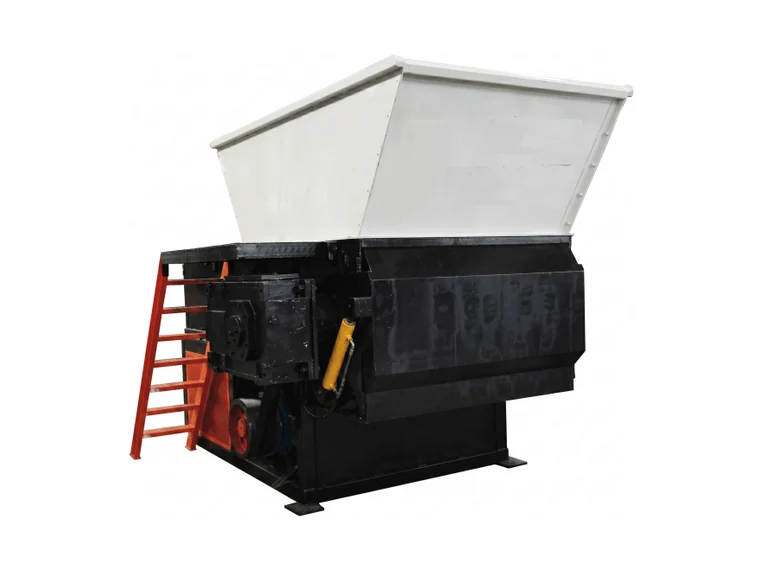
- Model shown
- DS7272 dual-shaft
- Drive
- 2 × 110 kW independent
- Feed opening
- 1,800 × 1,800 mm
- Rotor speed
- 5–25 rpm, high torque
How it works
Metal shredders are the first stage in most recycling lines: they reduce oversized scrap to a size the downstream crushers, screens and separators can actually handle. Choosing between single, dual and four shafts comes down to what you are feeding in and how fine the output has to be.
The DS7272 dual-shaft unit shown here is the largest capacity configuration, with a 1,800 × 1,800 mm feed opening and twin 110 kW drives that keep torque stable even when one shaft meets hard material. Low rotor speed (5–25 rpm) produces high torque with far less noise than a hammer mill, and automatic torque monitoring reverses the rotors before an unbreakable object can stall them.
Blades are hardened D2 tool steel at 58–62 HRC and can be swapped between hook profiles for metals and flat profiles for softer material. Blade gap is adjusted hydraulically without dismantling the chamber, and an optional pusher ram forces bulky items into the cutting zone.
A shredder reduces size by tearing rather than cutting. Rotating shafts carry hardened blades or hammers that grab the feed, drag it against a fixed counter-blade and pull it apart along its weakest plane. Because the material is torn instead of sheared in one clean pass, shredders tolerate mixed, bulky and contaminated scrap that would stall a crusher.
Shaft count sets the character of the machine. A single shaft runs fast against a static counter-knife and relies on a screen to hold material until it is small enough to pass, which gives tight output control. Twin shafts turn slowly and counter-rotate, pulling difficult material in without a screen. Four shafts split the work between a tearing pair and a refining pair, which is how a fine output is reached at low speed and low noise.
Key features
- Single-, dual- and four-shaft configurations for different output targets
- Anti-jam reversal protects the rotors from unbreakable material
- Hardened D2 blades, 58–62 HRC, interchangeable profiles
- Hydraulic blade gap adjustment without disassembly
- Optional hydraulic pusher ram for bulky scrap
How to choose shredders
- Start from the largest single piece you will feed and the throughput you need per hour — those two numbers fix the feed opening and the drive power.
- Decide whether the downstream process needs a controlled particle size. If it does, a screened single-shaft machine is the right family; if the goal is volume reduction before further sorting, a twin-shaft machine is more tolerant.
- Check what the material does under load. Ductile aluminium and thin sheet wrap around shafts; mixed light waste bridges in the hopper. Both are solved by machine geometry and a pusher ram, not by adding power.
- Plan the wear parts before you buy: blade or hammer replacement interval, whether blades can be changed individually, and whether the cutting chamber is reachable from the top.
Technical data
| Model shown | DS7272 dual-shaft |
|---|---|
| Drive | 2 × 110 kW independent |
| Feed opening | 1,800 × 1,800 mm |
| Rotor speed | 5–25 rpm, high torque |
| Throughput | 2–8 t/h, material dependent |
| Output size | 50–300 mm |
| Model | Power | Blade shaft dia. | Cutter box | Weight | Accepts |
|---|---|---|---|---|---|
| S400 | 25 kW | 200 mm | 400 × 430 mm | 3,300 kg | Metal, plastic, wood, tyres |
The S400 is the smallest twin-shaft unit; the DS7272 above is the largest. Anything in between is matched to your material and throughput.
Typical applications
- Large scrap yards and transfer stations
- Auto recyclers and end-of-life vehicle processing
- Industrial demolition scrap
- Bulky mixed metal and municipal waste
Specifications are indicative for the model family and are confirmed against your material in the quotation. Wear parts, power supply and control options are listed per project.
Frequently asked questions
What capacity does the Industrial Metal Shredder handle?
2–8 t/h, material dependent. Throughput depends on the material, its bulk density and how evenly the machine is fed, so the figure is confirmed against your material in the quotation.
What power supply does the Industrial Metal Shredder need?
2 × 110 kW independent. Confirm the supply available on site — voltage, phases and available capacity — before the machine is configured, because the drive is built to the destination supply.
Where is the Industrial Metal Shredder normally installed?
Typical installations: Large scrap yards and transfer stations; Auto recyclers and end-of-life vehicle processing; Industrial demolition scrap. Siting is decided by the feed arrangement and the space needed around the machine for maintenance access.
How do I choose between a single shaft and a dual shaft shredder?
Choose single shaft when the next process needs a controlled particle size — a screen holds the material until it is small enough, so output is predictable. Choose dual shaft when the feed is bulky, mixed or contaminated and the aim is volume reduction; it pulls material in without a screen and tolerates pieces that would stall a fast rotor.
Does a shredder need a conveyor or can it be fed directly?
Both are possible. Direct feeding with a grab or forklift suits low throughput and mixed batches; a conveyor or hopper with a pusher ram gives a steadier feed and is what most plants choose once throughput is continuous. The infeed height and opening on the machine determine which is practical on your site.
Often specified together
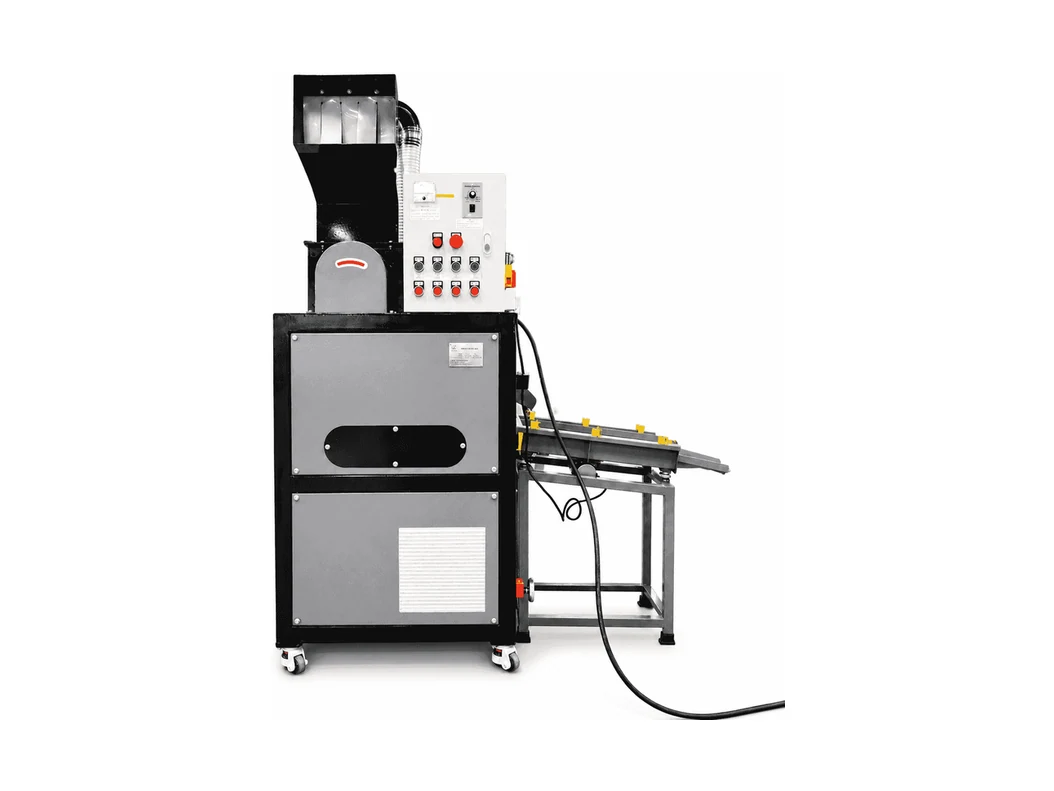
Copper Wire Granulator
Dry-type granulator that turns mixed insulated cable into clean copper granules, from a 220 V workshop unit to a 600 kg/h production machine.
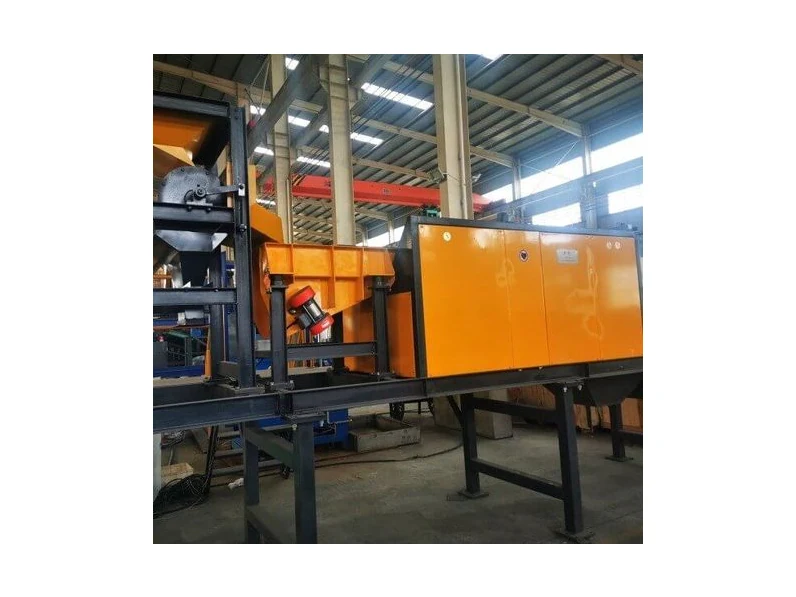
Eddy Current Separator
High-frequency rotor that ejects aluminium, copper and zinc from mixed streams, separating particles down to 3 mm at >99% aluminium recovery.