
Copper Wire Granulator
Dry-type granulator that turns mixed insulated cable into clean copper granules, from a 220 V workshop unit to a 600 kg/h production machine.
- Process type
- Dry mechanical separation (crushing + airflow + vibration)
- Feed material
- Insulated copper cable and wire below 20 mm diameter
- Copper purity
- Up to 99.9%
- Sorting rate
- 99%
40–100 kg/h units from $699; 300 kg/h units and complete cable recycling lines from $8,500. Final price depends on model, voltage and dust-collection options.
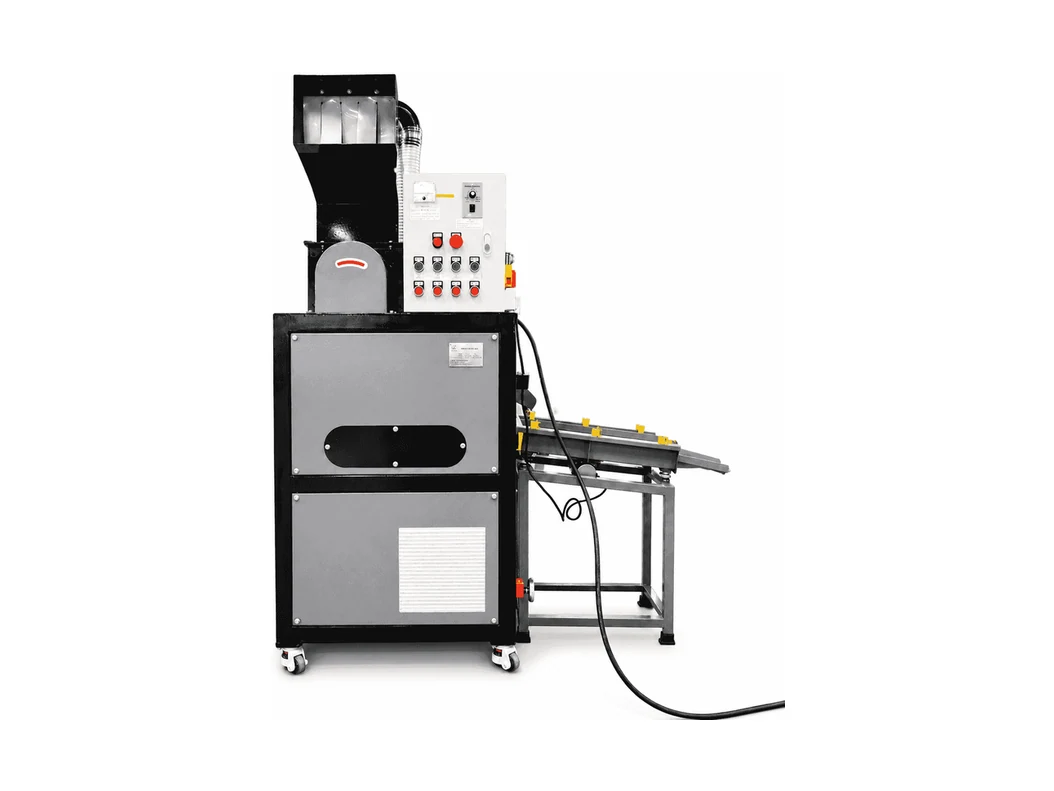
How it works
The granulator cuts insulated cable into short pieces, then separates copper from plastic through a combination of vibration and airflow. No water and no chemicals are used, so there is no wastewater to treat and no secondary pollution to manage on site.
Capacity runs from 30 kg/h on the single-phase entry model up to 600 kg/h on the three-phase production unit. On cable below 20 mm outside diameter — automotive harness, household wire, communication cable and mixed thin scrap — the machine recovers copper at up to 99.9% purity with a 99% sorting rate.
A PLC sequences crushing, feeding and separation, so one operator can run the machine after a short handover. DC53 alloy blades are heat-treated for wear resistance, and the enclosed frame with integrated dust collection keeps the working area quiet and clean.
Cable granulation is a dry, mechanical process. Insulated wire is cut into short pieces, then the mixture of copper and plastic is separated by two physical differences between the materials: their weight, exploited by an airflow stage, and their behaviour on a vibrating table, exploited by a gravity stage. No water and no chemicals are involved, so there is no wastewater stream to treat.
Output quality depends on how cleanly the copper is released. Blades that crush rather than cut produce plastic dust that contaminates the copper and reduces the price the granulate commands, which is why blade steel and blade clearance matter more than drive power on these machines.
Key features
- Single-phase 220 V entry model — no three-phase wiring required; 110 V available on request
- Dry separation process: no water, no acid, no wastewater discharge
- DC53 alloy-steel blades, heat-treated for wear resistance
- PLC control with automated crushing and separation
- CE marked, 12-month warranty, lifetime technical support
How to choose cable granulation
- Match the machine to the cable diameters you actually buy. Thin automotive and communication wire behaves differently from thick armoured cable, and a granulator set for one will underperform on the other.
- Confirm the power supply you have. Single-phase machines exist specifically so a small workshop can start without a three-phase connection.
- Ask what the copper purity figure is measured on, and on which cable type — purity on thin mixed wire is not the same test as purity on clean single-core cable.
- Check the dust collection arrangement. A dry process concentrates plastic dust, and how that dust is contained determines whether the machine can run indoors.
Technical data
| Process type | Dry mechanical separation (crushing + airflow + vibration) |
|---|---|
| Feed material | Insulated copper cable and wire below 20 mm diameter |
| Copper purity | Up to 99.9% |
| Sorting rate | 99% |
| Models | YS-TM200 / 260 / 400 / 500 / 600 |
| Model | Capacity (kg/h) | Power | Weight (kg) | Dimensions (m) |
|---|---|---|---|---|
| YS-TM200 | 30–60 | 4.5 kW | 350 | 0.56 × 0.85 × 1.55 |
| YS-TM260 | 50–80 | 7.5 kW | 500 | 1.19 × 0.6 × 1.15 |
| YS-TM400 | 150–200 | 14 kW | 1,100 | 1.65 × 1.28 × 2.1 |
| YS-TM500 | 200–300 | 28 kW | 1,850 | 2.6 × 1.6 × 2.3 |
| YS-TM600 | 300–600 | 42 kW | 3,200 | 5.2 × 6 × 2.2 |
Capacity depends on cable type, copper content and operator feeding rate.
Typical applications
- Scrap cable and wire recovery
- Automotive wiring harness processing
- E-waste cable fraction from dismantled electronics
- Small recycling businesses and scrap yards adding copper capability
Specifications are indicative for the model family and are confirmed against your material in the quotation. Wear parts, power supply and control options are listed per project.
Frequently asked questions
Which models of the copper wire granulator are available?
5 configurations are listed on this page: YS-TM200, YS-TM260, YS-TM400, YS-TM500, YS-TM600. The right one is set by the throughput you need and the largest piece you will feed.
Where is the Copper Wire Granulator normally installed?
Typical installations: Scrap cable and wire recovery; Automotive wiring harness processing; E-waste cable fraction from dismantled electronics. Siting is decided by the feed arrangement and the space needed around the machine for maintenance access.
How do I get a price for the Copper Wire Granulator?
There is no list price — every unit is configured to the material first, because the drive, chamber or coil changes with it. Send the material you process, the throughput you need per hour and the destination port, and the quotation is built on those three.
Does cable granulation use water or chemicals?
No. The separation is mechanical: the cable is cut into granules, then copper and plastic are separated by airflow and vibration according to their different weights. Because no water is used, there is no wastewater to treat and no chemical residue on the copper.
What cable size can a granulator process?
Granulators are built for insulated wire below roughly 20 mm outside diameter — automotive harness, household wire, communication cable and mixed thin scrap. Thick armoured or lead-sheathed cable is normally stripped or handled by a different process rather than fed to a granulator.
Often specified together
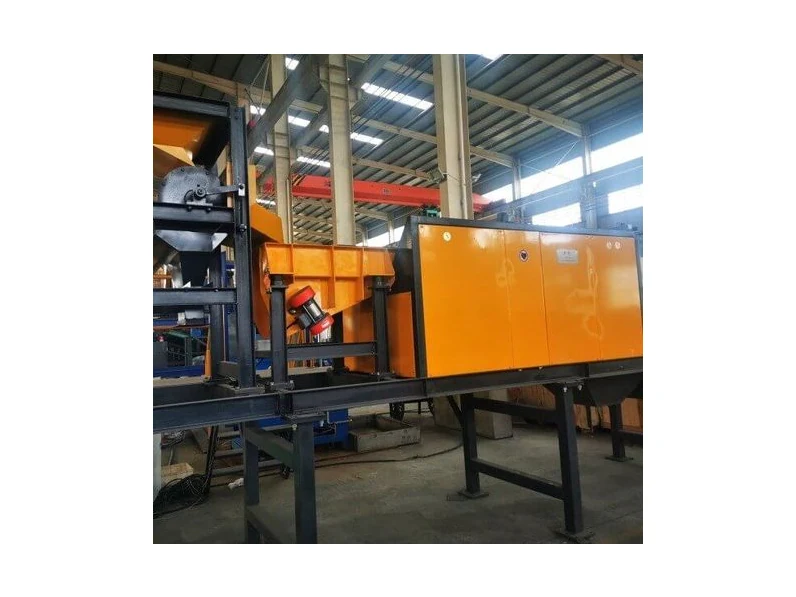
Eddy Current Separator
High-frequency rotor that ejects aluminium, copper and zinc from mixed streams, separating particles down to 3 mm at >99% aluminium recovery.
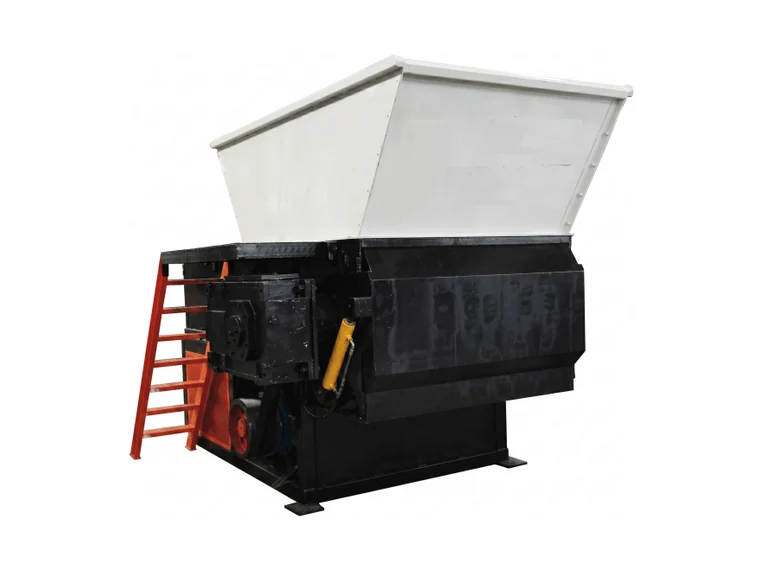
Industrial Metal Shredder
Single-, dual- and four-shaft shredders that reduce bulky metal scrap to a consistent 50–300 mm output, with anti-jam reversal and hardened blade sets.