
Dual Shaft Shredder
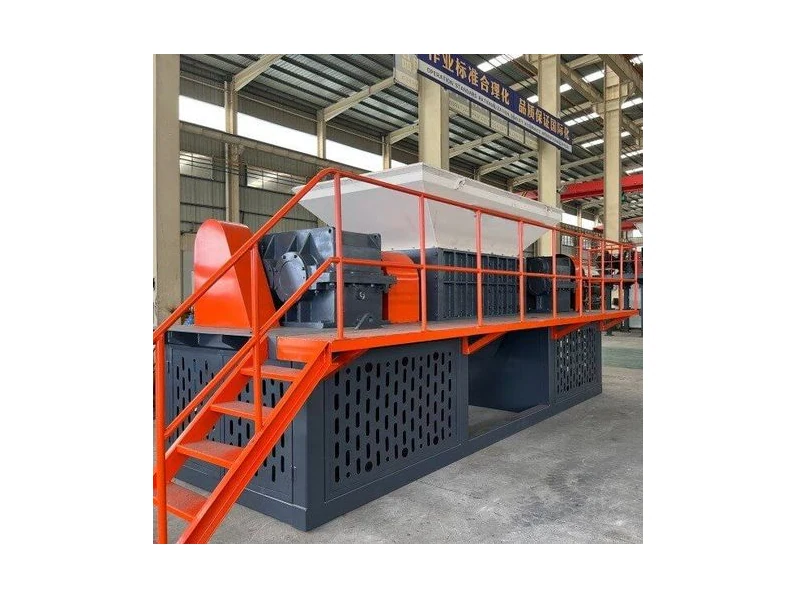
The DS46150 is a purpose-engineered high-power shredder for the secondary aluminum industry.
- Model
- DS46150
- Drive power
- 180 kW per shaft (360 kW total)
- Shafts
- 2, counter-rotating
- Max profile width
- 1,570 mm
How it works
specifically designed for the challenging characteristics of aluminum alloy profiles: high ductility that causes wrapping, variable section thickness, and the need for clean chip output for remelting.
A shredder reduces size by tearing rather than cutting. Rotating shafts carry hardened blades or hammers that grab the feed, drag it against a fixed counter-blade and pull it apart along its weakest plane. Because the material is torn instead of sheared in one clean pass, shredders tolerate mixed, bulky and contaminated scrap that would stall a crusher.
Shaft count sets the character of the machine. A single shaft runs fast against a static counter-knife and relies on a screen to hold material until it is small enough to pass, which gives tight output control. Twin shafts turn slowly and counter-rotate, pulling difficult material in without a screen. Four shafts split the work between a tearing pair and a refining pair, which is how a fine output is reached at low speed and low noise.
Key features
- 180kW per shaft (360kW total) provides exceptional pulling force to tear thick-wall aluminum profiles and extrusions
- Counter-rotating shaft design prevents material wrap-around — a critical issue with ductile aluminum
- Blade geometry optimized for non-ferrous metals: produces blocky chips rather than long ribbons
- Fast-change blade cassette system: full blade replacement in under 2 hours, minimizing production downtime
- Accepts profiles up to 1570mm wide — suitable for full curtain-wall sections and large structural members
- Self-cleaning rotor design with anti-jam hydraulic protection
How to choose shredders
- Start from the largest single piece you will feed and the throughput you need per hour — those two numbers fix the feed opening and the drive power.
- Decide whether the downstream process needs a controlled particle size. If it does, a screened single-shaft machine is the right family; if the goal is volume reduction before further sorting, a twin-shaft machine is more tolerant.
- Check what the material does under load. Ductile aluminium and thin sheet wrap around shafts; mixed light waste bridges in the hopper. Both are solved by machine geometry and a pusher ram, not by adding power.
- Plan the wear parts before you buy: blade or hammer replacement interval, whether blades can be changed individually, and whether the cutting chamber is reachable from the top.
Technical data
| Model | DS46150 |
|---|---|
| Drive power | 180 kW per shaft (360 kW total) |
| Shafts | 2, counter-rotating |
| Max profile width | 1,570 mm |
| Noise level | ≤88 dB(A) |
Specifications are indicative for the model family and are confirmed against your material in the quotation. Wear parts, power supply and control options are listed per project.
Frequently asked questions
What power supply does the Dual Shaft Shredder need?
180 kW per shaft (360 kW total). Confirm the supply available on site — voltage, phases and available capacity — before the machine is configured, because the drive is built to the destination supply.
How do I get a price for the Dual Shaft Shredder?
There is no list price — every unit is configured to the material first, because the drive, chamber or coil changes with it. Send the material you process, the throughput you need per hour and the destination port, and the quotation is built on those three.
How do I choose between a single shaft and a dual shaft shredder?
Choose single shaft when the next process needs a controlled particle size — a screen holds the material until it is small enough, so output is predictable. Choose dual shaft when the feed is bulky, mixed or contaminated and the aim is volume reduction; it pulls material in without a screen and tolerates pieces that would stall a fast rotor.
Does a shredder need a conveyor or can it be fed directly?
Both are possible. Direct feeding with a grab or forklift suits low throughput and mixed batches; a conveyor or hopper with a pusher ram gives a steadier feed and is what most plants choose once throughput is continuous. The infeed height and opening on the machine determine which is practical on your site.
What determines the output size of shredded scrap?
On a screened machine, the screen aperture sets the upper limit — material stays in the chamber until it passes. On an unscreened twin-shaft machine, output size is set by blade geometry and shaft speed instead, so the result is coarser but more tolerant of difficult feed.
Often specified together
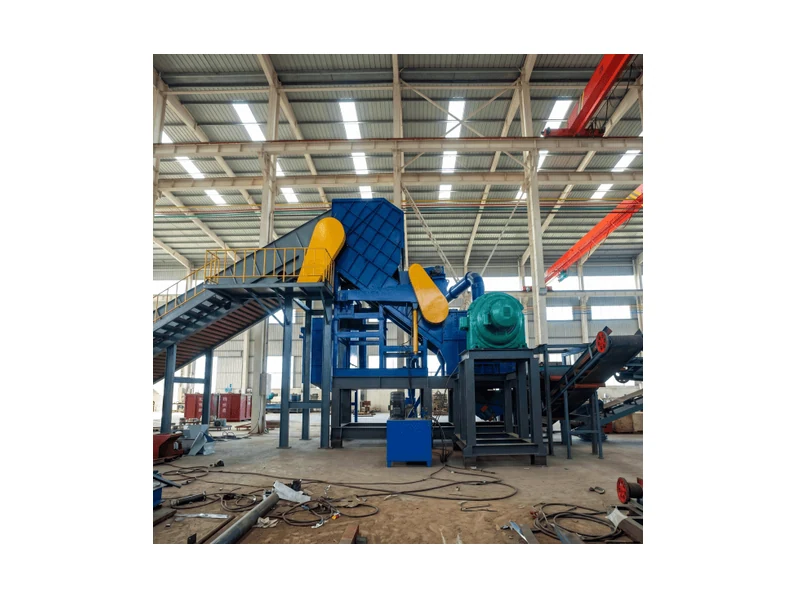
Heavy Duty Scrap Steel Shredder
The SCL600 is a high-capacity hammer mill shredder engineered for heavy-duty scrap steel processing.
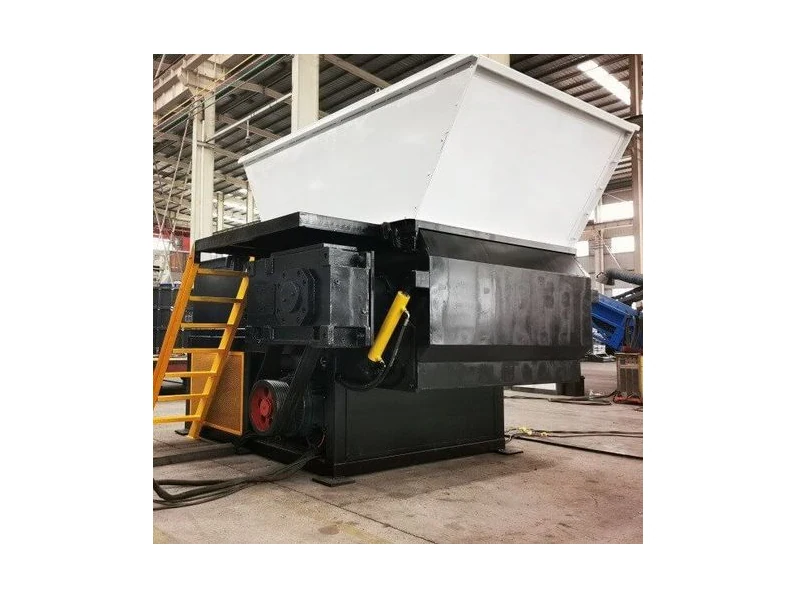
Single Shaft Shredder
The SS48150 single shaft shredder offers a different shredding approach from the dual-shaft design: it runs at higher rotational speed with a cutting rotor and a hydraulic pusher ram.
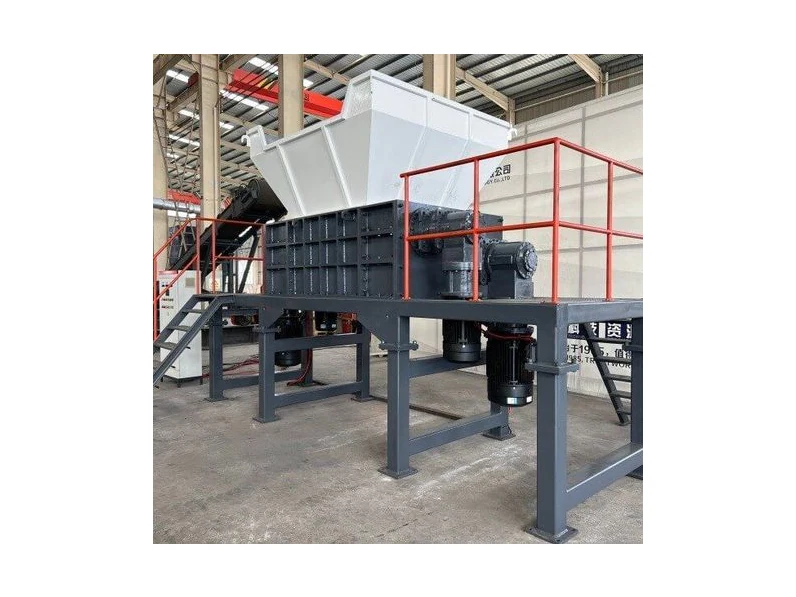
Four Shaft Shredder
The FS130120 four-shaft shredder represents the highest level of size consistency in slow-speed industrial shredding.